
Amid Hurricane Helene Recovery, NC Tourism Spending Charts Variable Growth
Amid Hurricane Helene Recovery, NC Tourism Spending Charts Variable Growth
Raleigh, N.C. - Visitor spending increased for 59 of North Carolina’s 100 counties in 2025, according to data released Wednesday by the N.C. Department of Commerce. The preliminary findings from an annual study commissioned by Visit NC, a unit of the Economic Development Partnership of North Carolina, reflect the economic impact of tourism on local economies across the state. |
|
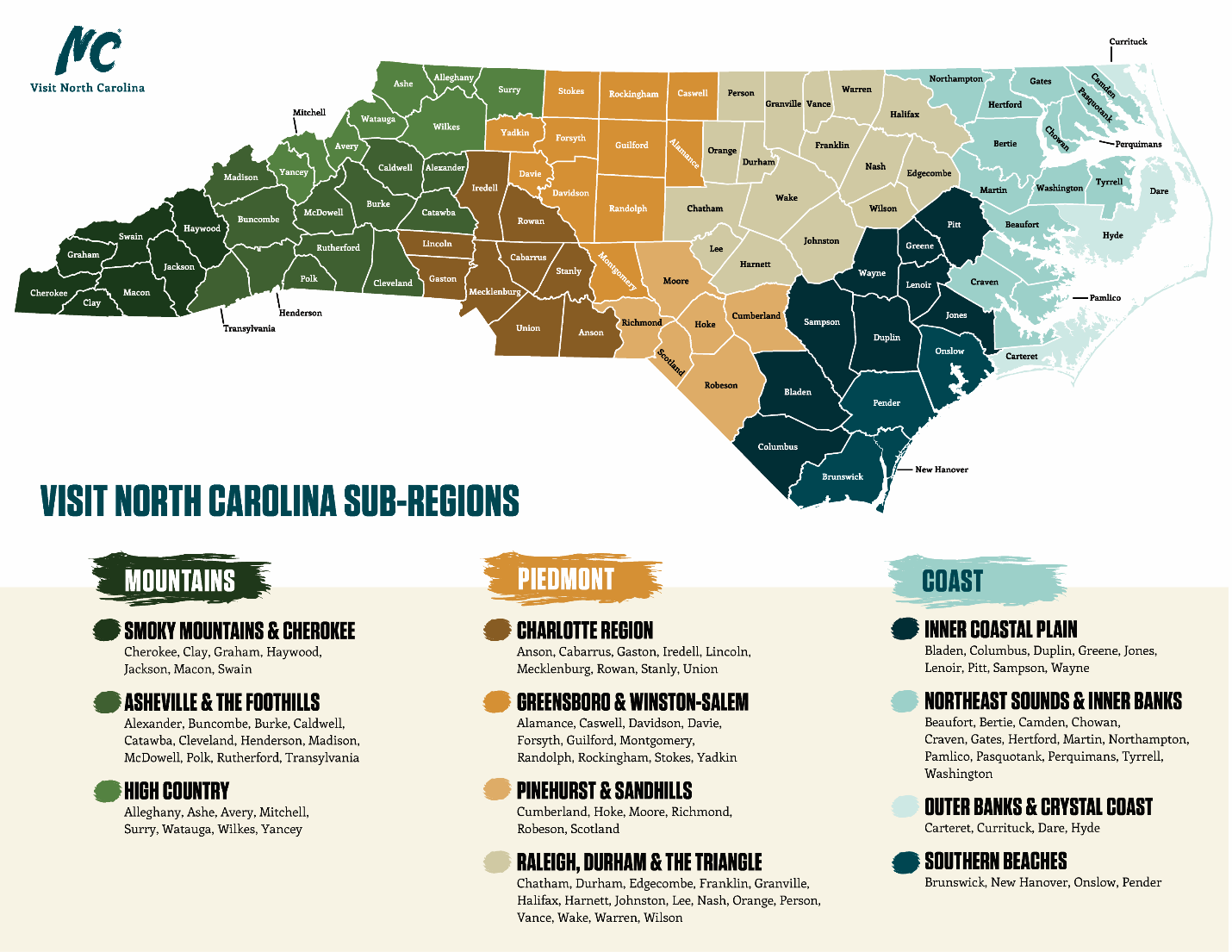
Ten of the state’s 11 regions experienced growth in visitor spending. In the three mountain regions, the numbers reflect continued resiliency in the aftermath of Hurricane Helene. The Smoky Mountains & Cherokee region, which sustained the least damage, saw the largest boost at 4.3%, driven largely by increases in Cherokee (+14%) and Macon (+11%) counties. With 2.5% growth in visitor spending, the High Country region charted a solid rebound, led by Yancey (+6%) and Ashe (+4%) counties. While Asheville & the Foothills region saw a 0.7% decline overall, notable growth was recorded in Caldwell (+7%), Burke (+6%) and Cleveland (+5%) counties. “From the mountains to the coast, the findings underscore North Carolina’s enduring appeal to travelers,” said N.C. Commerce Secretary Lee Lilley. “They also speak to the resilience that has fueled the mountain recovery, and we can celebrate the strength of our tourism industry, which generated $37.2 billion in visitor spending last year.” The findings also reinforce the goals of North Carolina's First in Opportunity Strategic Economic Development Plan, which recognizes vibrant communities and quality-of-place investments as key drivers of long-term economic competitiveness and regional prosperity. Tourism is an important contributor to those goals, supporting jobs, small businesses and local economies across North Carolina. The visitor spending study, commissioned by Visit NC and conducted by Tourism Economics, provides preliminary estimates of domestic and international traveler expenditures as well as employment, payroll income, and state and local tax revenues directly generated by these expenditures. The statistical model draws on detailed data from Visit NC as well as data derived from federal and state government sources, nationally known private and non-profit travel organizations, and other travel industry sources. Key findings
“As much as we’d love to see growth in each of our 100 counties, the study confirms the vitality of North Carolina’s tourism economy,” said Wit Tuttell, executive director of Visit NC. “Our appeal is rooted in our culture, our natural wonders, and the creative forces that shape the experiences in each destination. Those strengths can withstand a hurricane and the economic uncertainties we’ve experienced since the pandemic. We can draw inspiration from the mountain counties that have triumphed over Helene’s challenges as we continue the effort to see every destination reach higher ground.” Full tables can be accessed at this link. NC tourism facts
About Visit North Carolina: Visit North Carolina, the state's official destination marketing organization, is part of the Economic Development Partnership of North Carolina, a private nonprofit corporation that serves as North Carolina’s economic development organization. The EDPNC focuses on business and job recruitment, existing industry support, international trade, tourism and film marketing.
The mission of Visit NC is to unify and lead the state in positioning North Carolina as a preferred destination for leisure travel, group tours, meetings and conventions, sports events and film production to maximize economic vitality statewide. Each year, North Carolina welcomes about 40 million visitors who spend more than $37 billion during their visit. The tourism industry employs more than 230,000 people and generates more than $2.7 billion in state and local tax revenues. For more information, travel ideas and inspiration, go to VisitNC.com.
|