Elevate CEO Retreat set for October - only four seats remain
Elevate CEO Retreat set for October - only four seats remain
Is your business in the hot seat?
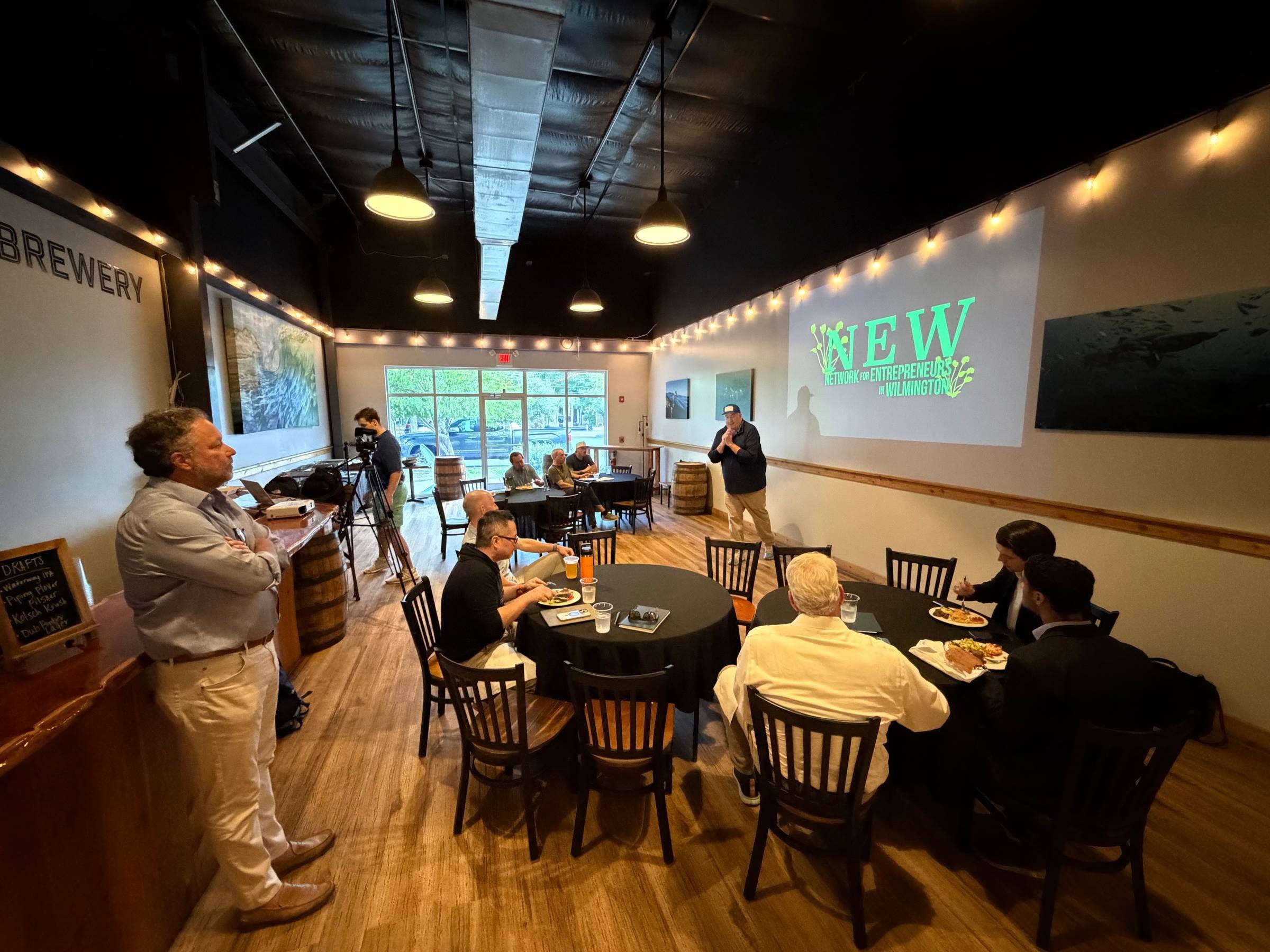
Monday night I was in the back room of Wrightsville Beach Brewery watching five founders tell the truth about their companies. They got 30 minutes of undivided, brutally honest attention from a room that wanted them to win. My VC shop Cape Fear Ventures invests nationally, but I Iove being inside the Wilmington tech ecosystem. It only gets stronger when the people who’ve built and sold companies keep showing up in rooms with the people still building them. The format: each founder gets a 30 minute business X ray.
Then open questions from the advisors and the other founders. It again underlined why the “hot seat” format with raw feedback beats the pitch competition dynamic. A pitch competition rewards performance, and the winner is usually whoever told the smoothest story. A hot seat rewards truth. Nobody is *scoring *you. Everyone is diagnosing, trying to find the cracks in your plan before the market finds it for you. The confidentiality is what unlocks it. When nothing leaves the room, people finally say the real thing. I sat through the same format twice a year in my OPM cohort at Harvard Business School while my own company was scaling. Those sessions stung. But they also caught many expensive mistakes before I made them, since a group of operators with no stake in your feelings will find the holes faster than any advisor you’re paying. It’s why the hot seat is day one of my Elevate CEO retreat, and why past cohorts consistently rank it among the most valuable exercises we do. Elevate CEO is my 72-hour retreat on the North Carolina coast where we take what the hot seat surfaces and fix it:
The hot seat is day one. The rest is implementation. The October cohort (26–29) has four spots remaining. $2,000 includes private lodging at my Saltwater Resort plus three days of operator-level work: real peer feedback, hard prioritization, founder-dependency reduction, and a 90-day roadmap. Details and application here Now, back to what we heard Monday night Here’s what I’d want every early-stage founder to take from the room. 1) Feedback is only worth what it costs the person giving it Applause is free. A peer who runs a company of their own, risking the awkwardness of telling you your pricing is wrong, is handing you something you can’t buy. Founders who build that kind of circle around themselves progress faster than founders who collect fans. 2) Get your house in order before you raise A team aligned on the same plan. Customer acquisition you can explain with numbers. Traction, and a growth plan a stranger can follow. Above all, true product-market fit rather than solution-market fit. Solution-market fit means customers agree your product works: The demo lands, the pilot goes fine, everyone says nice things. Product-market fit means they buy it at a price that sustains the business, and then buy it again, and again. Investors fund only the second. 3) Spend more time in customer surveys and interviews than feels productive You’re listening for two numbers:
That second number is the one founders too often skip. In a small business the cost of change is the owner’s weekend. In a mid-market company it’s a team’s productivity dipping for a quarter. In an enterprise it’s a security review and a manager spending political capital to sponsor you. Your value has to clear that cost by a multiple, and the only way to learn where it lives is to ask. 4) Put a date on the calendar, and a market checkpoint to hit by then Drift happens one “give it another quarter” at a time. Set the deadline, define what the market has to show you by then, and hold yourself to it. If the signal isn’t there, pivot or go back to your customers until you understand why. A plan without a deadline is how good teams lose years. 5) Watch your own bias Conviction built your company, but it can also deafen you. Too many founders hear every “yes” at full volume and file every “no” as an exception. The feedback that contradicts you most is usually the piece worth studying, and the worst thing a founder can do is let bias filter what the market is telling them. Every founder on that hot seat walked out with a sharper picture of their business than they walked in with. So did I. It takes real grit to open the books in front of your peers, because you’re choosing truth over optics in a room where the easy move is to perform. You’re putting your metrics and your unfinished thinking on the table, whether that’s pricing that might be wrong, a leaky funnel, a team misalignment, a thesis you’ve been protecting … And inviting people you respect to stress-test it in real time. That kind of transparency costs something: ego, comfort, and the illusion that you’re “handling it.” But it buys something far more valuable: Specific feedback you can act on, earlier course correction, and the clarity that comes from hearing hard questions before the market asks them at a much higher price. But here’s the limit of a night like Monday, the hot seat finds the crack, but you still drive home alone with it. Fixing it takes more than 30 minutes. That’s what Elevate CEO is. We work through everything I’ve learned building and exiting 2 companies, and investing in more than 50 early-stage technology startups. The October cohort (26-29) has four spots remaining. Your $2,000 includes private lodging at my Saltwater Resort and three days of operator-level work on the company: real peer feedback, hard prioritization, systems to reduce founder dependency, and a 90-day roadmap where the only thing left to do is execute. |